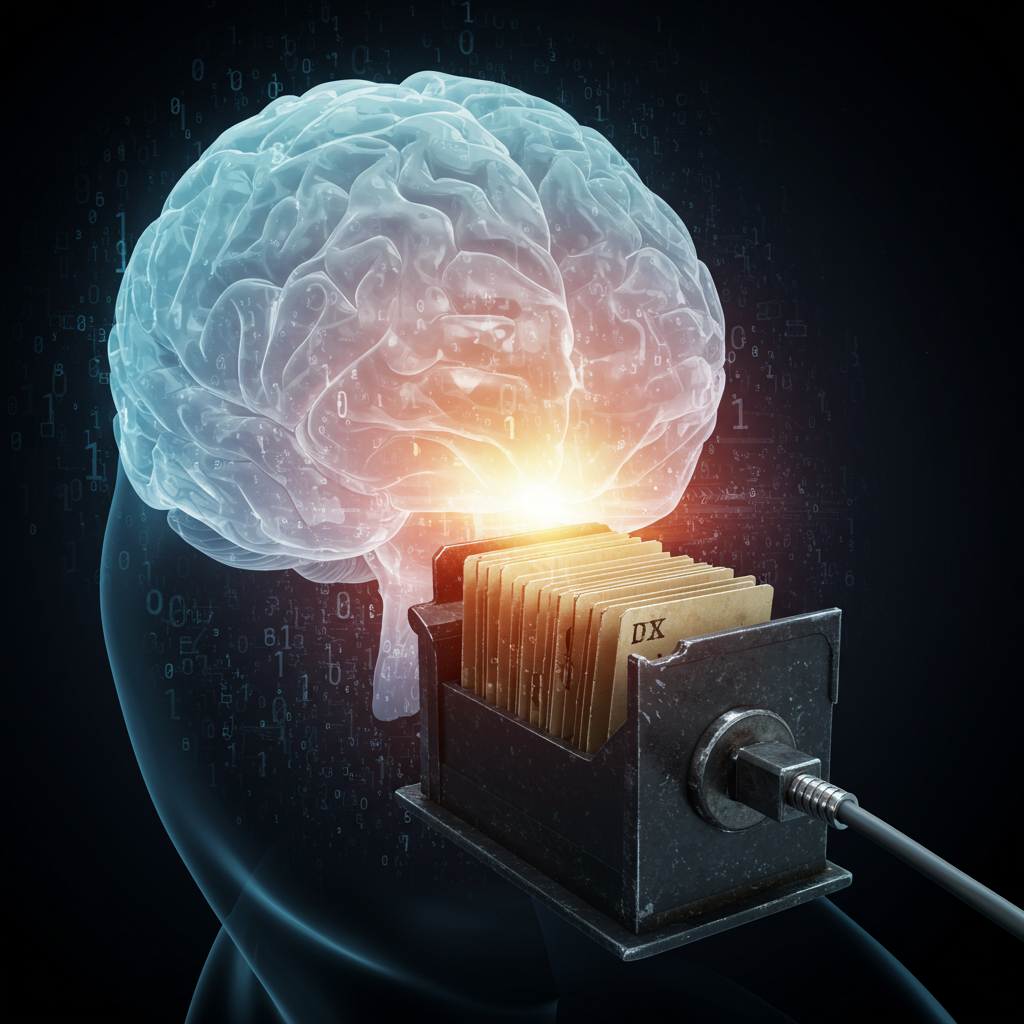
Beneath the overwhelming hype, a surprising truth emerges from recent research: the AI you rely on for your business may not be truly “intelligent,” but merely a sophisticated memorizer. The very metrics we use to gauge its “smarts” are fundamentally flawed. Many entrepreneurs are enthusiastically adopting small business AI tools, believing they are gaining a revolutionary problem-solver, yet often overlook the real AI limitations lurking beneath the surface. Before committing time and money to a system that could easily fail when faced with a brand-new problem or require genuine creativity, you need an honest assessment of its current capabilities. This guide cuts through the marketing noise to expose five critical, often-overlooked boundaries of small business AI right now, ensuring you adopt these powerful tools strategically and avoid costly implementation mistakes.
Why We Overestimate Small Business AI Smarts
The rapid adoption of artificial intelligence by companies big and small suggests these tools possess near-perfect intelligence. However, recent studies highlight a critical flaw: the methods we use to test AI often make the tools appear far smarter than they truly are. This overestimation can lead businesses to place undue trust in systems that haven’t proven true understanding.
The Flaw in AI Testing: Memorizing Answers
When we talk about intelligence, we usually refer to the ability to learn a concept and then apply it successfully in a brand-new situation. But for large AI models, the process is often more akin to advanced memorization.
Much like a student cramming for an exam, AI systems are trained on massive volumes of data, including old test questions and examples. If a benchmark test uses questions that are very similar to—or sometimes, exactly the same as—those found in the training data, the AI doesn’t need to understand the underlying principles. It simply recognizes the pattern and recalls the correct answer.
This problem is highlighted when evaluating math performance. Some AI tests reuse classic, human-designed exam problems (like those from the American Invitational Mathematics Examination, or AIME). When researchers adjust these problems slightly—for example, by using much larger or more complex numbers that require true mathematical understanding—the AI’s performance often drops dramatically. The model was not learning the math; it was merely memorizing solution structures.
How Broken Benchmarks Trick AI Models
AI benchmarks are standardized tests designed to measure a model’s skill level. For small business AI tools, these benchmarks often cover tasks like language comprehension, simple coding, or data classification. The issue arises when these standardized tests become integrated into the very datasets used to train the next generation of AI.
When an AI model is trained on the test itself, it creates an illusion of high intelligence. A vendor might claim their entrepreneur AI tools score 95% on a public benchmark. However, this high score only proves the AI is adept at pattern recognition within its known data landscape. It does not prove it can handle the unpredictable realities of your specific business environment. This phenomenon of “test contamination” significantly exaggerates the true general intelligence of the system.
The Real Difference Between Pattern Recognition and Understanding
The foundational challenge of AI limitations lies in the difference between pattern recognition and genuine understanding.
- Pattern Recognition (What AI excels at): Identifying correlations, predicting the next word in a sequence, or finding similarities between millions of images. This is incredibly useful for tasks like summarizing documents or classifying common customer service queries.
- Understanding (What AI often lacks): Forming abstract concepts, understanding causality, applying knowledge to novel situations that have no historical precedent, or deriving ethical meaning.
- Bias Amplification: If the training data contains historical biases (e.g., gender bias in engineering hiring records), the small business AI tool will learn and perpetuate those biases, potentially exposing the company to legal or ethical risks.
- Date Constraint: Models are snapshots in time. An AI trained in 2023 will not have real-time knowledge of events, regulations, or trends occurring in 2024 unless it is continuously and expensively updated.
- Incomplete Worldview: If a system is trained mainly on US-centric business data, it will demonstrate severe topical AI limitations when applied to a European or Asian market strategy, resulting in inappropriate recommendations.
- Stress Testing: Feed the AI edge cases, corrupted data, or proprietary scenarios that require complex numerical manipulation. If it fails these unique tests, its claimed intelligence is likely only pattern recognition.
- Proprietary Benchmarks: Create a small, confidential dataset of tasks unique to your business that the AI model definitely hasn’t seen during its public training. This is the only way to measure its ability to adapt and generalize.
- A/B Testing with Human Control: Run crucial AI operations in parallel with human oversight or traditional methods until you are certain the AI outputs are consistently superior and accurate.
This gap means that while small business AI can manage repetitive tasks brilliantly, it struggles deeply when faced with a requirement for true, novel comprehension or strategic insight, leading directly to critical failures in real-world business scenarios.
*
Critical AI Limitations for Your Business
When relying on artificial intelligence, businesses must recognize that the flaws in testing translate directly into practical business risks. AI operates within a defined scope; stepping outside that scope leads quickly to failure.
Why AI Fails When Facing New Problems
A common mistake when adopting small business AI is believing the tool is truly autonomous. AI thrives on predictability. If your AI-powered inventory system has only ever processed predictable seasonal changes, how will it handle an unprecedented global supply chain shock or an unexpected regulatory lockout?
When a business encounters a unique market shift, a one-off customer complaint requiring specialized empathy, or a logistical hurdle not covered in its massive training dataset, the AI defaults to its best guess—which is often an irrelevant or incorrect answer based purely on historical patterns. This inability to adapt to truly novel, zero-shot problems is a major vulnerability, especially for innovative startups or niche businesses where standard industry patterns don’t apply.
The Creativity Gap: Where Entrepreneur AI Tools Fall Short
True entrepreneurship requires creativity: the ability to generate unique solutions, design novel business models, or develop marketing strategies that defy current trends. While generative AI can produce content and suggestions, it operates by recombining existing knowledge, statistics, and linguistic patterns.
This is the creativity gap. Entrepreneur AI tools can help draft emails or suggest blog topics, but they cannot independently generate genuine novelty. They struggle to:
1. Formulate a radical new ethical framework for your business that challenges existing norms.
2. Develop strategic, counter-intuitive investment plans that rely on human foresight rather than historical correlation.
3. Provide empathy and genuine human judgment in complex hiring or disciplinary situations where context matters more than keywords.
When high-stakes decisions require abstract thought and strategic foresight, relying solely on AI output can lead to generic, uninspired, or incorrect choices.
How Training Data Controls AI Limitations
Every AI model is inherently limited by its training data. This data dictates the model’s worldview, its biases, and its eventual performance boundaries. Therefore, understanding what the AI was trained on is often more important than the high scores it received on general benchmarks.
The limitations imposed by training data include:
*
Using Small Business AI Wisely
Recognizing the flaws in AI testing and the inherent AI limitations is the first step toward successful and trustworthy adoption. To use small business AI wisely, entrepreneurs must adopt a stance of critical skepticism and rigorous verification.
Checking If Your AI Tools Are Truly Working
Never rely solely on the vendor’s performance reports. Businesses need to implement their own internal validation processes to ensure the tool is working reliably for their unique needs.
Here are ways to test small business AI for true understanding:
Preventing Costly AI Implementation Mistakes
Many implementation mistakes stem from forgetting that AI is a tool, not a replacement for judgment. To avoid costly AI implementation mistakes:
1. Do Not Over-Automate High-Stakes Tasks: Tasks involving legal compliance, major financial forecasts, or sensitive employee reviews must always retain a mandatory human review step.
2. Audit the “Why”: Ask the AI tool (or the vendor) how it arrived at a decision. If the logic is opaque or cannot be clearly explained (the infamous “black box” problem), the system is too risky for critical operations.
3. Invest in Data Hygiene: Before deploying AI, ensure your business data is clean, unbiased, and current. AI tools cannot fix problems with poor data; they only guarantee those problems propagate faster and at scale.
When Human Smartness Still Beats Small Business AI
Despite its impressive computational power, there are several key areas where human intelligence remains irreplaceable. For any entrepreneur, understanding these boundaries is critical for defining where small business AI serves as an assistant and where it cannot replace leadership.
Humans still beat AI in: Ethical and Moral Reasoning, Strategic Intuition (reading complex, non-quantifiable signals like market mood), Deep Empathy and Diplomacy, and Defining Purpose—because while AI can help achieve goals, only humans can define which goals are worth achieving.
Leveraging Skepticism for Successful AI Integration
The rapid deployment of small business AI often obscures a critical reality: perceived intelligence is frequently an illusion born of pattern recognition and contaminated training data, not genuine comprehension. This fundamental gap necessitates a shift from blind trust to informed skepticism.
For entrepreneurs, successful AI integration hinges on moving past standardized vendor scores. Businesses must stress-test tools with proprietary, novel data and implement rigorous internal validation to ensure reliability in real-world scenarios. While AI serves as an indispensable assistant for optimizing repetitive processes, it must never replace human judgment in high-stakes areas. Strategic intuition, ethical leadership, and genuine novelty remain firmly within the human domain. Leveraging AI wisely means recognizing its defined limitations, maximizing its efficiency, and retaining critical human oversight where adaptation and abstract reasoning are paramount.