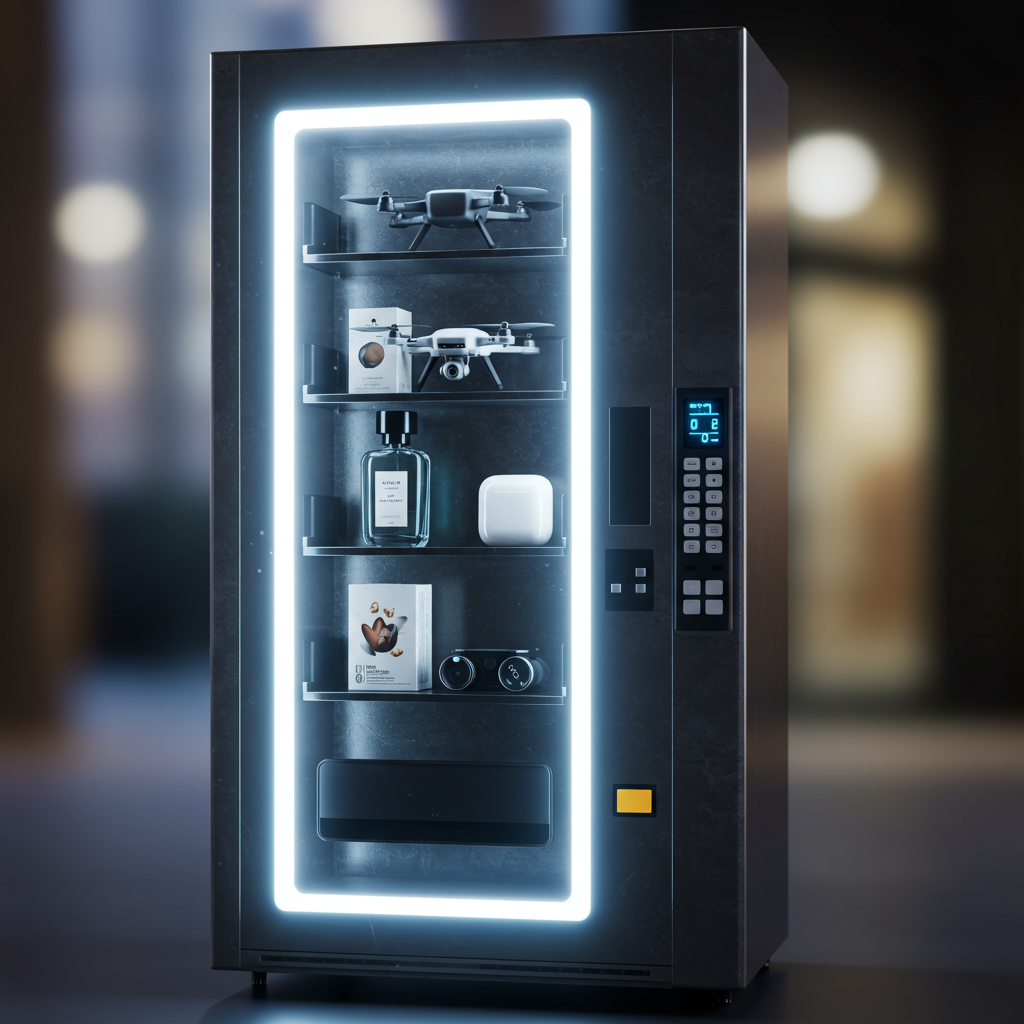
If your idea of starting a vending machine business still involves sticky soda cans and stale chips, you’re missing out on one of the fastest-growing sectors of automated retail. This isn’t your grandma’s candy dispenser; modern dispensing machines offer opportunities for high-profit, niche items—from specialized fragrances to premium electronics—proving that unique, profitable business concepts are thriving outside traditional retail spaces. This ultimate starter guide will show you how to ditch the outdated model, explore unconventional high-return ideas, and, crucially, reveal why prioritizing essential operational safeguards like robust liability insurance is the non-negotiable step to building a scalable and truly passive income stream in the vending machine business.
Automated Retail: Why Modern Vending Machine Business is Different
The term “vending machine business” often brings to mind dusty, old dispensers filled with sticky soda cans and generic snacks. However, the industry has undergone a massive transformation, shifting into what is now best described as automated retail. This modern approach leverages technology to create highly efficient, scalable, and profitable business concepts that traditional vending could never achieve.
Ditching Sticky Soda Cans: Technology and Location
The biggest difference between old vending and modern automated retail lies in technological integration. Today’s dispensing machines are not simple mechanical boxes; they are sophisticated, networked points of sale. This leap in capability allows owners to manage entire fleets remotely and dynamically.
Key technological shifts have redefined the industry:
- IoT (Internet of Things) Integration: Modern machines are connected to the internet, allowing owners to monitor inventory levels, sales data, and machine health in real-time from anywhere in the world. This functionality minimizes wasted service trips and maximizes operational efficiency.
- Payment Flexibility: Cash is largely obsolete. Automated retail machines accept credit cards, mobile payments (Apple Pay, Google Wallet), and facilitate digital loyalty programs, catering to contemporary consumer habits.
- Targeted Inventory Management: Through real-time data analytics, owners can track precisely which products sell fastest in specific locations and adjust inventory dynamically, maximizing the profit generated per square foot.
- Beauty and Personal Care: Machines placed in high-end malls, airports, or hotels dispensing travel-sized luxury skincare, designer fragrances, or specific makeup essentials.
- Specialized Electronics: Items like portable chargers, noise-canceling earbuds, or specialized gaming accessories placed strategically near tech hubs or convention centers.
- Gourmet and Health Food: Dispensing locally sourced, high-quality meal components or fresh, proprietary coffee blends in upscale apartment complexes or office buildings where specific convenience is valued over generalized cost savings.
- Machine Acquisition: This is the largest capital expense. Financing options often exist for high-end units.
- Initial Inventory: Stocking inventory requires significant capital when dealing with higher-margin products (e.g., electronics or specialized supplements).
- Placement Fees/Rent: The commission paid to the location owner, typically 10% to 25% of sales, or a fixed monthly rental fee.
- Technology Overhead: Often overlooked, this includes software subscriptions for remote monitoring, data analytics, and payment processing fees, which are vital for operational efficiency.
- Remote Data Management: Use software that provides immediate alerts when inventory is low or when a machine reports a technical error (like a component failure). This proactive approach maximizes uptime and minimizes emergency travel.
- Scheduled Maintenance and Outsourcing: Establish strict, reliable routes for restocking and minor maintenance. Outsourcing this labor to a trusted third party significantly increases the passive nature of the income stream.
- Automated Reordering: Integrate your inventory management with suppliers so that stock levels trigger automated purchase orders, drastically reducing the administrative burden and preventing costly stockouts.
Furthermore, location strategy is now hyper-specific. Automated retail targets high-traffic, specific-need areas—like airport terminals needing specialized charging cables or corporate campuses requiring personalized gourmet coffee—rather than simply placing a generic snack machine in a break room.
Understanding the Scale of Automated Retail Success
One of the defining characteristics of a modern vending machine business is its inherent scalability. By removing many of the traditional overhead costs associated with a physical storefront, automated retail allows entrepreneurs to grow their operations efficiently.
Traditional retail requires expensive long-term leases, hiring staff, and managing significant utility costs. In contrast, automated retail requires only a small footprint and minimal labor, allowing high-margin products to be sold 24/7. This model shifts the focus from selling high volumes of low-cost items (like candy bars) to selling lower volumes of high-cost, specialized goods. This dramatically increases overall profitability and positions the operation as a sophisticated profitable business concept, leading directly to the exploration of high-return niches.
Unique Dispensing Machine Ideas for High Profit
If you want your vending machine business to thrive in the automated retail era, you must move past the standard snack and drink model. Success comes from identifying niche markets and dispensing premium, high-demand products where convenience is paramount. These non-traditional dispensing machine ideas generate significantly higher returns.
Premium Goods: From Fragrances to Specialized Electronics
High-profit margins are achieved when the perceived value of the item is significantly higher than its wholesale cost. Customers are willing to pay a premium for immediate, 24/7 access to essential or luxury items.
Profitable niche examples include:
In these premium sectors, the convenience factor justifies higher pricing, translating directly into superior profit margins compared to standard convenience store items.
Service-Based Vending: Beyond Physical Products
The concept of automated retail is not limited to physical goods. Entrepreneurs are increasingly exploring service-based models using similar machine technology to fulfill immediate needs without inventory management challenges. Key services include automated key duplication kiosks found in hardware stores, specialized ticket printing for local attractions, or high-end shoe-shining stations. Some machines even offer novel, experiential vending concepts, such as personalized photo printing or instant bouquet assembly, turning the machine into a destination rather than just a transaction point.
Finding the Right Niche for Your Vending Machine Business
The most successful automated retail operations start by identifying a specific pain point or unmet need within a defined location. Before investing in any equipment, entrepreneurs must conduct deep market analysis:
1. Who is the primary customer in this specific location? (e.g., commuters, hospital visitors, college students.)
2. What immediate problem does this location present? (e.g., lack of healthy food options, long wait times, instant need for tech accessories.)
3. What is the highest-margin item that solves that exact problem?
For instance, placing health and wellness machines (protein supplements, specialized recovery drinks) directly inside gyms or sports complexes caters precisely to the immediate, high-demand needs of that clientele, creating a highly effective and profitable business concept.
Launching Your Vending Machine Business: Costs and Crucial Protection
Starting an automated retail venture requires meticulous planning regarding capital expenses and operational protection. While the operational expenses can be remarkably low once established, the initial startup costs, especially for high-tech dispensing machine ideas, can be substantial.
Calculating Startup Costs: Machines, Inventory, and Hidden Overhead
The cost to start a vending machine business varies widely based on the technology required. A basic snack machine might cost $2,000–$4,000, but a new, refrigerated, high-tech dispensing machine capable of handling premium goods can easily exceed $10,000.
Essential startup costs include:
Underestimating the ongoing cost of remote management software is a common mistake; this software is crucial for transforming a manual hustle into an efficient automated system.
The Non-Negotiable Step: Prioritizing Robust Liability Insurance
One of the most critical, yet frequently ignored, aspects of launching a vending machine business is securing proper liability insurance. Because automated retail places machinery and products on public or private property, exposed to the general public 24/7, risk management is paramount.
You must have robust liability insurance. Consider the following risks:
1. Physical Harm: A machine could malfunction, tip over, or injure a customer (e.g., a tripping hazard).
2. Property Damage: The machine could leak, cause electrical faults, or be damaged during service, damaging the location owner’s property.
3. Product Liability: If you dispense food, supplements, or consumables, there is a risk of contamination, mislabeling, or allergic reactions.
Adequate liability coverage protects your entire operation from catastrophic financial loss and is almost always required by sophisticated location owners (such as airports, hospitals, or malls) before they will sign a placement contract.
Setting Up Systems for Truly Passive Income
Is vending a true form of passive income? It can be, but only through smart automation that minimizes the owner’s daily interference. To achieve a reliable, passive income stream, entrepreneurs must invest in high-quality systems:
Conclusion
The modern vending landscape is no longer defined by simple mechanics and low-margin snacks; it is a sophisticated domain of automated retail. By integrating IoT, real-time data analytics, and flexible payment systems, entrepreneurs can move beyond generic offerings to launch highly scalable, profitable business concepts.
Success in this era demands a strategic focus: identifying high-demand niches, dispensing premium goods or specialized services, and targeting locations where convenience justifies higher pricing. While the transition requires meticulous planning—particularly around calculating high-tech equipment costs and securing robust liability insurance—these foundational investments are essential.
For those ready to embrace remote management and systemic automation, automated retail offers a powerful model for achieving truly passive income, positioning the operation to thrive in the 24/7 digital marketplace.